SEC Private Fund Charges: Forensic Asset Tracing for Fraud Schemes
Introduction
Regulatory scrutiny over private alternative investments reached a new peak on September 1, 2026, when regulatory authorities announced major SEC charges against San Francisco Bay Area private fund executives for orchestrating a multimillion-dollar Ponzi-like scheme. According to enforcement filings, fund principals misled limited partners (LPs), falsified performance metrics, and commingled investor capital to pay off earlier investors while funding lavish personal lifestyles.
For institutional investors, family offices, and legal counsel, this enforcement action is a stark reminder that opaque private equity and venture capital structures remain high-value targets for financial misconduct. When confidence breaks and regulatory charges drop, victims face a critical challenge: locating where the capital actually went and recovering it before it vanishes across layered entities.
Unraveling these complex private fund fraud schemes requires immediate, sophisticated investigative intervention. Forensic Investigations and Consultancy Services (FICS) provides the specialized financial forensic accounting and digital evidence expertise necessary to trace misallocated capital, expose fraudulent accounting entries, and reconstruct fund transactions for legal recovery.
Deciphering SEC Private Fund Charges in Modern Fraud Schemes
The SEC's recent actions reflect broader regulatory momentum targeting capital allocation, fee transparency, and valuation integrity across private markets. In alignment with updated SEC enforcement priorities for private fund managers, regulatory bodies are actively auditing registered investment advisers (RIAs) and exempt reporting advisers for structural misrepresentations.
Private fund fraud rarely manifests as simple theft on day one. Instead, bad actors leverage complex corporate structures to conceal financial distress, frequently deploying tactics such as:
- Capital Commingling: Siphoning funds across multiple General Partner (GP) entities, special purpose vehicles (SPVs), and personal accounts under the guise of inter-fund loans or management fee advances.
- Valuation Inflation: Fabricating portfolio company valuations or reporting unearned performance markups to collect inflated performance fees (carried interest).
- Ponzi-Like Liquidity Cascades: Using fresh capital contributions from incoming LPs to fund redemptions or yield distributions for legacy investors.
- Side Pocket Abuse: Moving illiquid or non-existent assets into segregated side pockets to hide losses and prevent independent auditor oversight.
When regulators file enforcement actions, funds are often frozen, leaving limited partners scrambling to establish true remaining net asset values (NAV) and map out potential recovery channels.
Forensic Asset Tracing Methodologies for Complex Private Fund Fraud
Uncovering siphoned capital behind private equity and hedge fund structures demands a dual methodology combining forensic accounting with advanced digital forensics. Fraudsters routinely conceal cash flow behind nested shell corporations, layered bank transfers, and falsified audit reports.
To construct an airtight financial timeline, forensic specialists follow a structured asset recovery framework:
Financial Reconstruction and Banking Trail Analysis
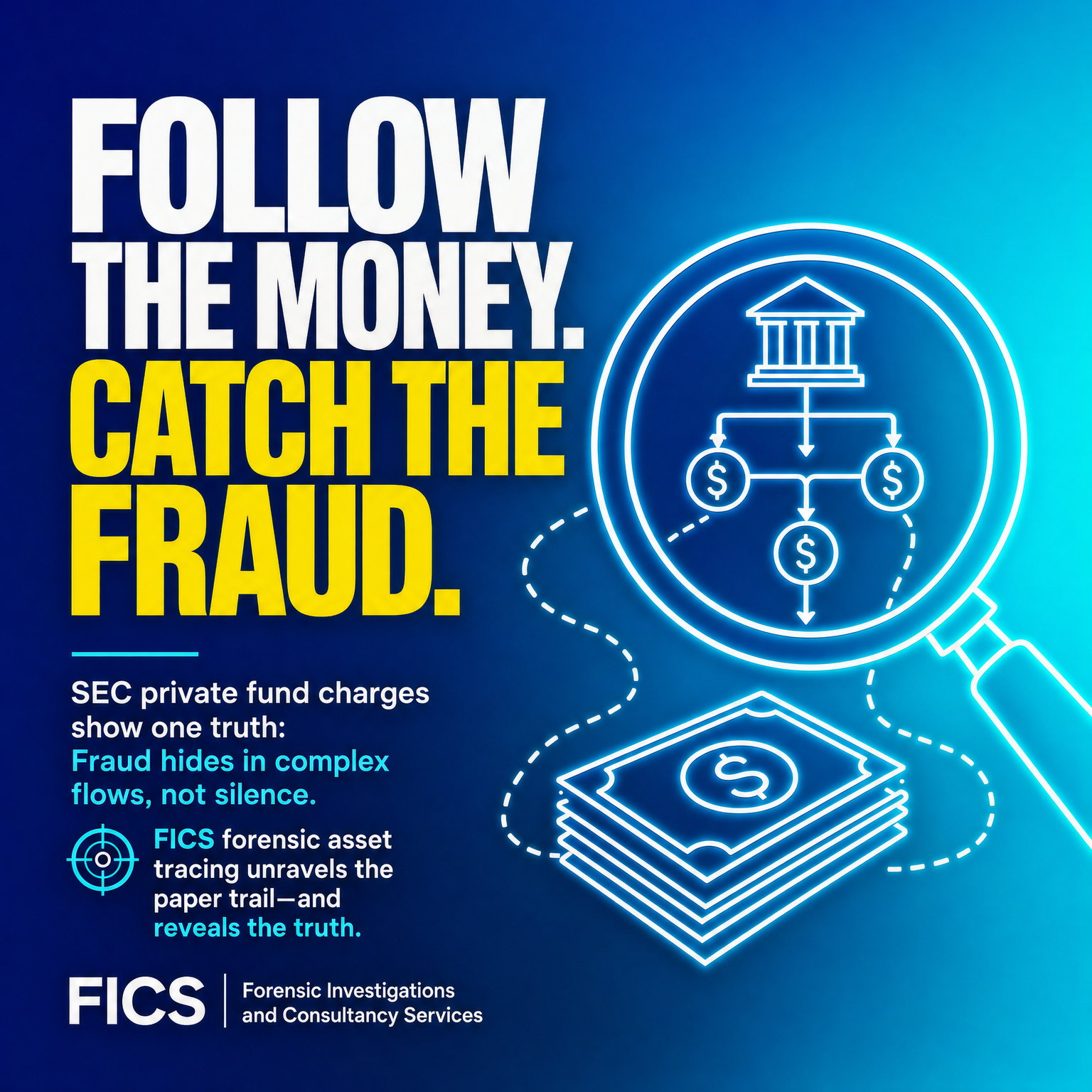
Forensic accountants analyze sub-ledgers, general ledgers, capital call notices, and raw bank statements. By executing multi-account flow-of-funds analyses, investigators map every dollar from its initial LP capital call down to its ultimate destination. When executives execute swift, multi-layered wire transfers to obscure illicit diversions, deploying rapid response mechanisms similar to the protocols outlined in our FBI 72-hour kill chain guide for wire transfers can substantially improve asset recovery windows.
Digital Evidence and Metadata Verification
Financial records presented by dishonest managers are frequently altered. When evaluating financial statements, email correspondence, or valuation certificates, simple static images are legally insufficient. Legal counsel must ensure digital evidence integrity because standard screenshots fail in court without verified digital metadata. Forensic teams extract and preserve original electronic file metadata to prove deliberate record tampering and establish executive liability.
Internal Control and Audit Log Analysis
Investigating how fund controls were bypassed requires a granular look at administrative systems and fund accounting platforms. System access logs, wire authorization histories, and transaction modifications reveal who initiated illicit transfers and when. Implementing deep audit trail reviews builds upon critical governance lessons, similar to how institutions evaluate NY DFS audit log mandates for financial institutions.
Actionable Asset Recovery Strategies for Legal Counsel and Institutional Investors
When facing private fund defaults or SEC enforcement actions, speed and tactical precision determine recovery success. LPs and legal teams should execute a clear strategy:
- Secure Pre-Judgment Asset Freezes: Work with forensic teams to rapidly map domestic and offshore bank accounts tied to GPs and fund executives to secure immediate temporary restraining orders (TROs).
- Subpoena Fund Administrators and Custodians: Issue targeted third-party subpoenas to independent fund administrators, prime brokers, and banking institutions to retrieve raw transactional data directly, bypassing fraudulent GP records.
- Audit GP and SPV Intercompany Transactions: Focus forensic inquiries on intercompany transfers, management fee calculations, and expense allocations where fund capital is routinely siphoned under legitimate-sounding line items.
- Preserve Digital and Communication Footprints: Collect full forensic disk images and server backups of fund management environments before bad actors execute data destruction protocols.
- Engage Court-Appointed Receivers: Support regulatory or civil receivership proceedings by supplying structured flow-of-funds reports that establish asset ownership and overcome complex corporate liability shields.
Conclusion
The SEC’s charges against Bay Area private fund executives serve as a critical wake-up call for the alternative investment industry. As fund structures grow more complex, financial fraud schemes become harder to detect through traditional annual audits alone. When misrepresentations occur, institutional investors and legal counsel cannot afford to rely on self-reported GP documentation.
Protecting limited partner capital requires definitive proof, rapid digital preservation, and rigorous forensic asset tracing. By deploying sophisticated forensic accounting methodologies alongside court-admissible digital investigations, affected parties can successfully trace diverted capital, hold bad actors accountable, and maximize financial recovery.
If your institution faces potential fund misrepresentations or requires specialized investigative support for complex fraud schemes, FICS - Forensic Investigations and Consultancy Services delivers the forensic expertise necessary to uncover the truth and recover your assets.