DOJ Directive 26-12: Updating Fraud Protocols for 10 New Rules
Introduction
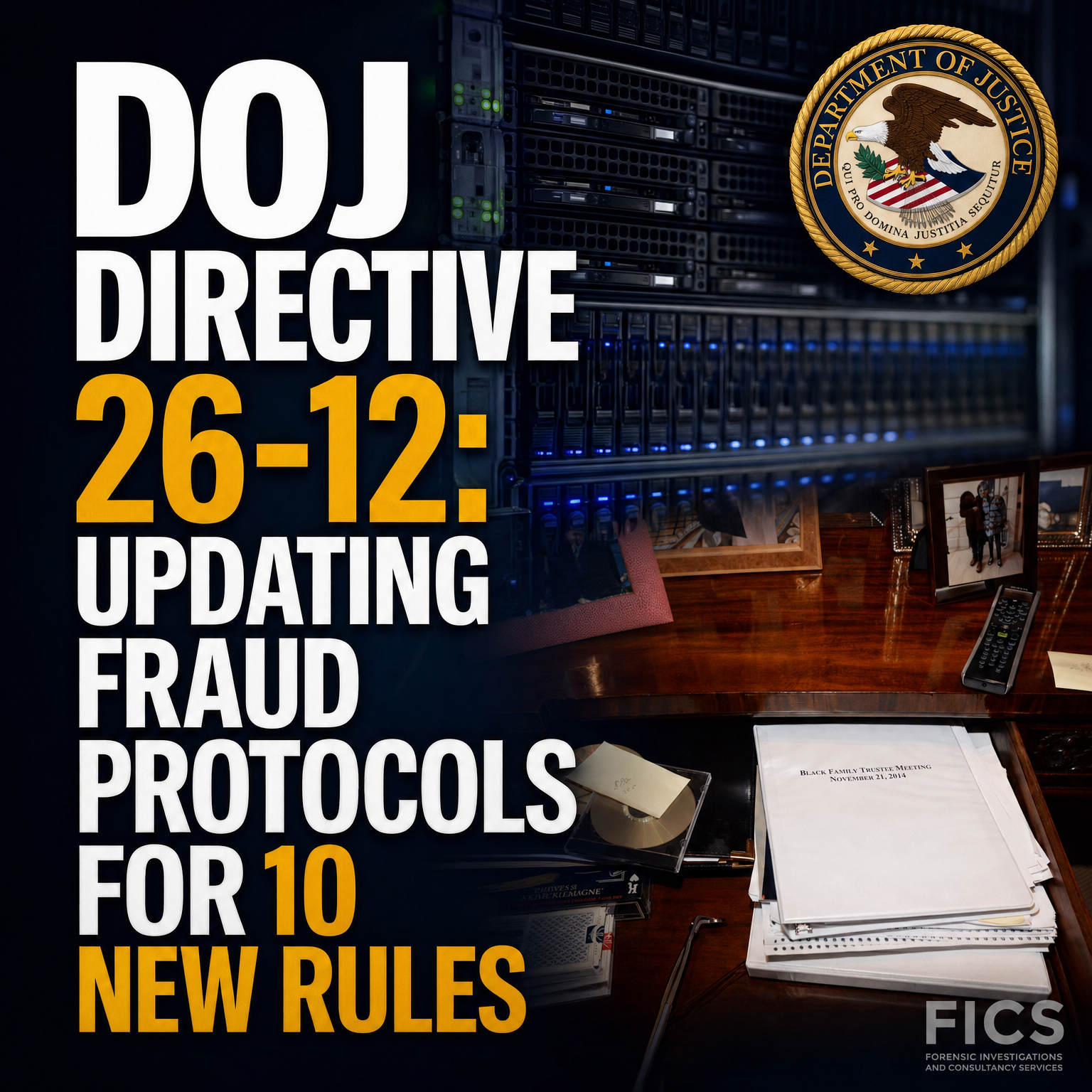
On October 1, 2026, the U.S. Department of Justice Fraud Division issued Directive 26-12, marking a definitive shift in how federal prosecutors evaluate corporate misconduct, charging decisions, and compliance program effectiveness. This directive introduces key adjustments to corporate enforcement priorities, requiring organizations to immediately audit and overhaul their existing internal investigation protocols.
For compliance officers, legal counsel, and forensic auditors, Directive 26-12 signals that passive monitoring and policy-only compliance programs are no longer sufficient to earn declination or cooperation credit. Federal prosecutors now assess whether an organization maintains proactive, data-driven oversight capable of detecting and remediating corporate fraud in real time.
Adapting to this directive requires an immediate transition toward technical evidence preservation, operational transparency, and rigorous third-party risk management. Organizations that fail to update their fraud risk management frameworks risk heightened regulatory scrutiny and severe financial penalties during DOJ enforcement actions.
Core Priorities in DOJ Directive 26-12 and Corporate Enforcement
The issuance of Directive 26-12 establishes precise benchmarks for assessing corporate liability and credit for self-reporting. Legal analysts highlighting the DOJ Fraud Division Directive 26-12 corporate enforcement priorities emphasize that prosecutors are focusing heavily on actionable data, executive accountability, and systemic remediation.
Under the updated guidelines, prosecutors analyze whether internal control failures were structural or isolated, while scrutinizing the speed at which leadership escalated anomalies. Organizations seeking favorable resolution must demonstrate that their compliance monitoring extends directly into high-risk operational hubs, including offshore entities and complex supply chain networks.
Furthermore, the directive places renewed focus on third-party intermediaries and vendor management. Legal experts reviewing the DOJ's National Fraud Division corporate enforcement priorities note that hidden beneficial ownership structures and vendor collusion are primary catalysts for federal investigation. To meet these heightened expectations, enterprises must evaluate vendor relationships thoroughly using targeted forensic tools to audit vendor supply chains for hidden ownership risks before regulatory queries arise.
Modernizing Corporate Fraud Protocols for Forensic Readiness
A core pillar of Directive 26-12 is the requirement for rapid, verified evidence production upon discovery of potential wrongdoing. Generic system logs and standard IT backups are often insufficient during complex corporate fraud inquiries. Prosecutors expect immutable audit trails that clearly demonstrate who accessed, altered, or exfiltrated sensitive commercial data.
Many organizations mistakenly rely on high-level administrative logs that miss underlying unauthorized activity or API exploitation. Understanding the distinctions between standard application monitoring and deep identity audits is critical; compliance teams must reconcile forensic logs vs API tokens to close identity audit gaps across all enterprise applications.
       DOJ Directive 26-12 Enforcement Evaluation Matrix
┌───────────────────────┬──────────────────────────────────────────┐
│ Compliance Focus Area │ DOJ Evaluation Standard                   │
├───────────────────────┼──────────────────────────────────────────┤
│ Detection Speed       │ Continuous, automated telemetry monitoring│
│ Data Integrity        │ Forensically sound, tamper-evident logs  │
│ Executive Oversight   │ Active compensation clawback mechanisms  │
│ Third-Party Vetting   │ Beneficial ownership and conflict audits │
└───────────────────────┴──────────────────────────────────────────┘
When internal anomalies surface, legal and forensic teams must move beyond standard corporate monitoring tools. Demonstrating full cooperation under Directive 26-12 requires producing forensically validated evidence that withstands strict judicial scrutiny, rather than incomplete internal IT summaries.
6 Essential Steps to Align Fraud Protocols with Directive 26-12
To ensure full operational compliance with the Department of Justice's updated standards, legal and risk teams should execute six concrete measures:
- Update Voluntary Self-Disclosure Trigger Timelines: Realign internal investigation workflows to ensure potential fraud is reported to executive leadership and external legal counsel within hours, rather than weeks.
- Implement Tamper-Evident Forensic Logging: Upgrade logging architecture across cloud and on-premises environments to preserve administrative access records in write-once-read-many (WORM) storage.
- Conduct Comprehensive Beneficial Ownership Audits: Re-screen all active vendors, contractors, and intermediaries to uncover concealed conflicts of interest and shell company affiliations.
- Establish Executive Compensation Clawback Clauses: Embed enforceable clawback provisions in executive contracts tied directly to compliance breaches and internal control failures.
- Formalize Ephemeral Messaging Policy Enforcement: Deploy strict technical controls and auditing mechanisms governing mobile and encrypted messaging apps on corporate devices.
- Execute Periodic Forensic Dry Runs: Conduct simulated internal fraud investigations to measure response times, evidence capture speed, and cross-departmental coordination.
Organizations seeking detailed guidance can analyze the official DOJ Fraud Division Corporate Enforcement Directive insights to align their internal reporting thresholds with federal prosecution standards.
Conclusion
DOJ Directive 26-12 establishes a modern benchmark for corporate compliance, evidence integrity, and executive accountability. Standard compliance programs relying solely on annual audits and static training modules no longer provide adequate protection against federal corporate fraud prosecutions.
To maintain defensibility under Directive 26-12, organizations must embed forensically sound monitoring, rapid incident response, and proactive third-party vetting into their day-to-day operations. Taking proactive steps today ensures your organization remains resilient, compliant, and prepared for regulatory scrutiny.