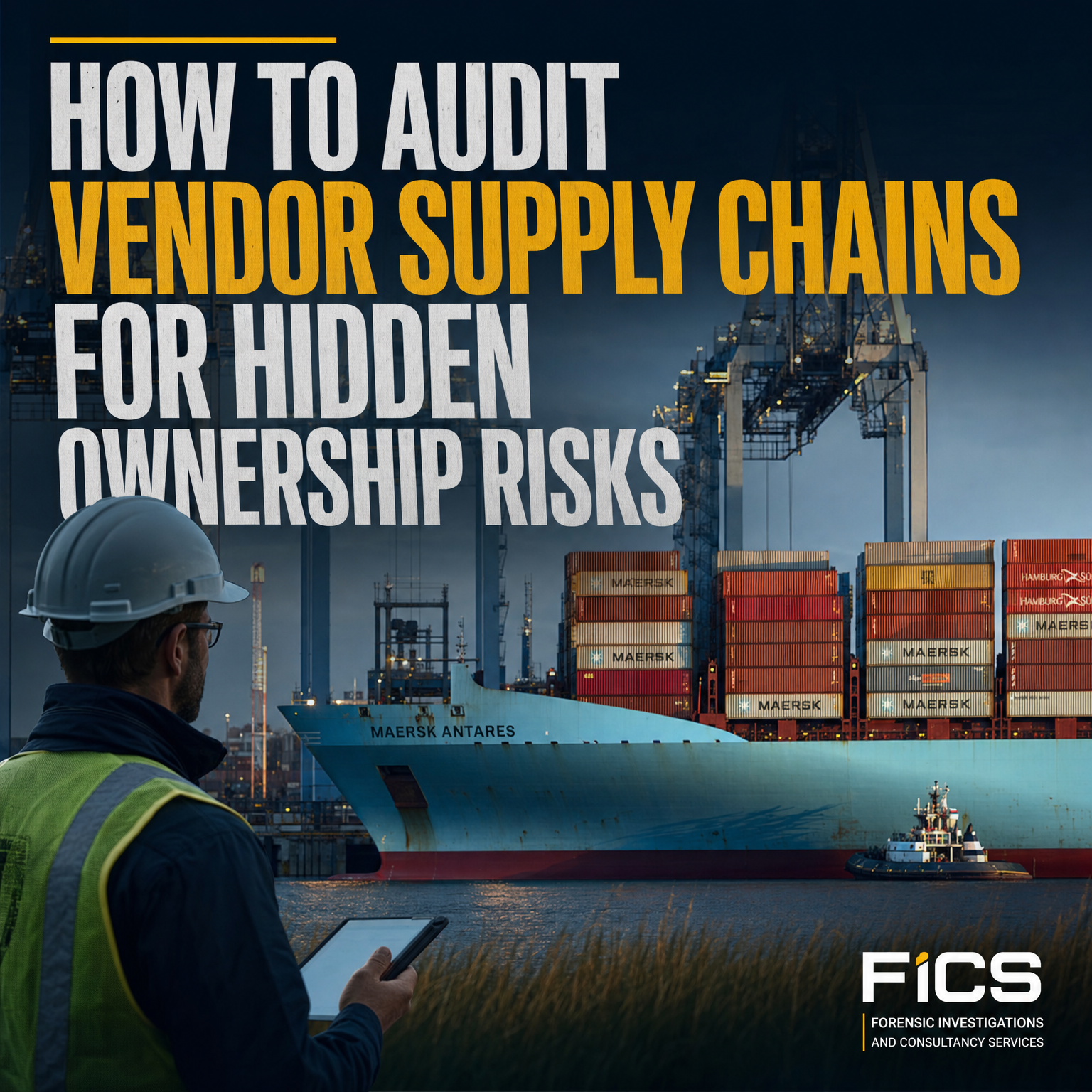
How to Audit Vendor Supply Chains for Hidden Ownership Risks
Introduction
In September 2024, the U.S. Department of Justice arrested a technology CEO for allegedly concealing foreign ownership of digital forensics software sold directly to government agencies. The indictment exposed how a Russian national maintained hidden operational control and equity interests in a domestic vendor, placing critical infrastructure and sensitive investigation data at risk.
This high-profile enforcement action underscores a growing reality for procurement and security teams: standard questionnaires are no longer enough to protect your organization. To defend against national security liabilities, regulatory penalties, and data exfiltration, risk leaders must learn how to audit vendor supply chains for hidden ownership risks using rigorous, forensic techniques.
When third-party software or service providers obscure their controlling entities, your enterprise absorbs the liability. Implementing deep-tier corporate risk assessments allows compliance and IT teams to identify deceptive ownership structures before signing multi-year vendor contracts.
Why You Must Audit Vendor Supply Chains for Hidden Ownership Risks
Concealed foreign influence rarely presents itself on standard vendor onboarding forms. Bad actors exploit multi-jurisdictional shell corporations, straw owners, and complex offshore holding structures to evade sanctions and security screening. Research on Ultimate Beneficial Owners: Risks Beneath the Surface shows that hidden ownership structures frequently mask foreign state interference, financial crimes, and severe operational vulnerabilities.
Traditional Onboarding vs. Forensic Supply Chain Auditing
---------------------------------------------------------------------
Standard Onboarding               Forensic Supply Chain Audit
• Self-reported questionnaires    • Independent corporate registry mapping
• Basic Dun & Bradstreet checks    • Deep-tier UBO and sanctions tracing
• Certificate of insurance review  • Source code & infrastructure analysis
• Static periodic review           • Continuous real-time risk monitoring
When hostile actors establish backend access to proprietary corporate software, they can exfiltrate sensitive data, manipulate system logs, or introduce unauthorized code. Organizations must align supply chain vetting with advanced security measures, much as they do when they audit hiring vetting to defend internal networks against insider threats. Executing robust vendor due diligence is essential to protecting both your digital perimeter and legal standing.
Uncovering Ultimate Beneficial Ownership: A Forensic Audit Framework
To detect hidden beneficial owners, your audit process must look far past the entity named on the contract. Ultimate Beneficial Ownership (UBO) refers to any individual or entity that holds 25% or more of corporate equity, exercises control over corporate decisions, or derives substantial financial benefit from the business.
Forensic investigations often reveal that software vendors operating out of domestic offices rely entirely on offshore engineering hubs located in high-risk jurisdictions. Utilizing modern beneficial ownership data and UBO screening solutions allows organizations to cross-reference global corporate registers, tax filings, and banking details.
                  +-------------------------------+
                  |  Domestic Front Entity (USA)  |
                  +---------------+---------------+
                                  |
                   100% Owned By  v
                  +-------------------------------+
                  | Holding Company (Cayman Is.)  |
                  +---------------+---------------+
                                  |
                   75% Control    v
                  +-------------------------------+
                  | Shell Corp (BVI / Cyprus)     |
                  +---------------+---------------+
                                  |
                  Ultimate Owner  v
                  +-------------------------------+
                  | Foreign State / Foreign Tech  |
                  +-------------------------------+
Where financial ownership is deliberately fragmented among shell corporations to remain under traditional regulatory thresholds, investigative methodologies mirror those found in our SEC Private Fund Charges: Forensic Asset Tracing Guide. Tracing equity transfers, dividend flows, and corporate directorships across international borders reveals who actually profits from and controls the enterprise.
5 Actionable Steps to Audit Vendor Supply Chains Today
To eliminate compliance blind spots and secure your third-party ecosystem, execute these concrete steps during every high-risk procurement audit:
- Perform Multi-Tier Corporate Structure Mapping: Request corporate ownership charts certified under penalty of perjury. Cross-check entity registration documents across state and international registries to identify holding companies registered in tax havens or non-cooperative jurisdictions.
- Verify Digital Infrastructure and Code Repositories: Inspect the vendor's digital footprint. Audit IP routing, code commit histories, and developer identities within software repositories to verify whether software engineering occurs in embargoed or high-risk foreign locations.
- Analyze Nominee Shareholders and Executive Leadership: Review corporate officers, board members, and minority shareholders. Cross-reference executive background data with corporate databases to uncover straw owners, family proxies, or former officers of sanctioned foreign entities.
- Conduct Forensic Financial and Wire Audit Tracing: Require vendors to declare all foreign banking relationships, affiliate management fees, and royalty distribution accounts. Unexplained outgoing transfers to offshore shell entities indicate hidden financial control.
- Implement Continuous API and Event Logging Auditing: Contractually enforce continuous risk scanning. Ensure that access controls, API integrations, and system interactions are monitored using techniques detailed in our guide on how to close identity audit gaps.
Conclusion
The DOJ’s enforcement actions demonstrate that vendor supply chain risks extend far beyond simple cybersecurity vulnerabilities. When third-party software vendors conceal foreign control, enterprise buyers face devastating legal liabilities, data breaches, and regulatory penalties.
To effectively audit vendor supply chains, organizations must shift from basic self-reported forms to rigorous, forensic ownership investigations. By interrogating complex ownership layers, verifying foreign developer footprints, and implementing continuous UBO screening, security and procurement teams can protect their enterprise from hidden threats.
FICS provides expert forensic investigations, corporate intelligence, and supply chain due diligence services tailored to protect your critical infrastructure. Contact FICS today to evaluate your high-risk vendors and secure your enterprise against foreign ownership liabilities.